Betta fish can survive without food for up to 10 days, but I wouldn’t recommend letting them go that long. After 4 to 7 days, they can enter starvation mode and face increased stress, risking their health.
Brief fasting fits into a maintenance routine and helps prevent obesity, but extended periods without food can lead to serious issues like organ failure. It’s essential to plan ahead for feeding if you’re away from home.
There’s more to reflect on for your betta’s well-being and the importance of water temperature.
How Long Can Betta Fish Go Without Food?
How long can a betta fish truly go without eating? Generally, a healthy adult betta can survive up to 10 days without food, though this isn’t advisable. After 4–7 days, they might enter starvation mode, which raises stress levels and risks organ failure.
While short fasting periods of 2–4 days can help prevent obesity, longer durations can lead to significant health issues. It’s wise to monitor your betta’s health closely after these fasting periods to guarantee they return to normal eating habits.
Always prioritize feeding your betta fish regularly for their overall well-being and happiness, and include varied diets such as brine shrimp.
Preparing for Absences and Feeding Solutions
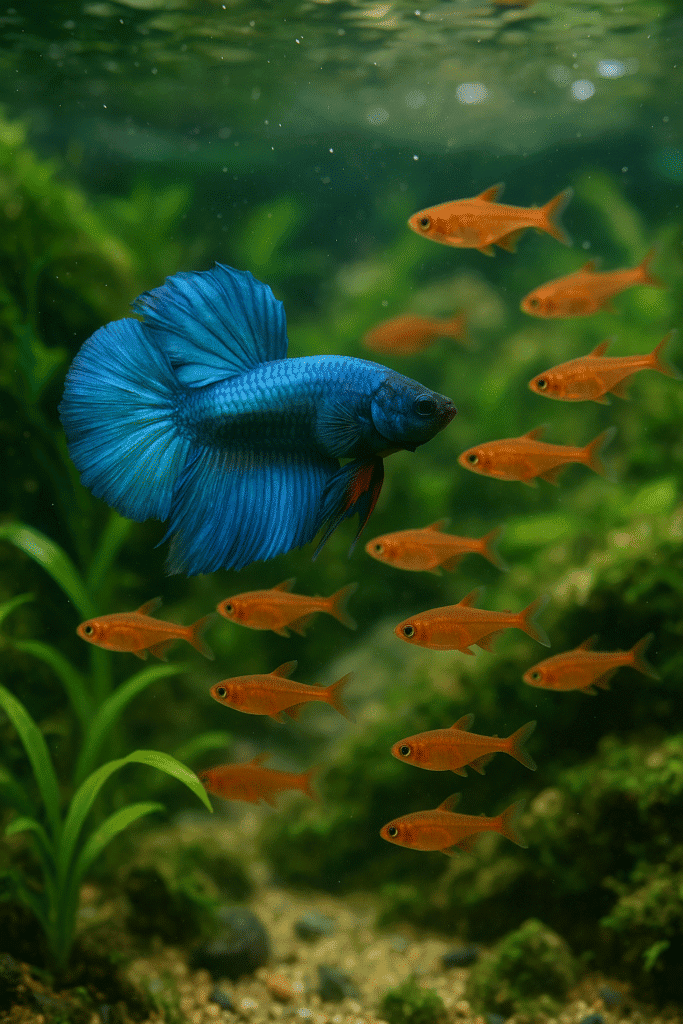
When planning for an absence, it’s important to take into account how your betta fish will be fed to guarantee their health and minimize stress. For absences longer than a week, consider using automatic feeders or hiring a fish sitter.
Automatic feeders can be programmed to dispense food at set intervals, but I recommend testing them beforehand. If you choose vacation feeders, be cautious; they can affect water quality in small tanks and are best for 5–7 day trips. Always provide clear feeding instructions and check water quality before and after your absence to maintain your betta’s well-being.
You might also explore freeze-dried foods or Betta Pellets to simplify care.
Conclusion
To sum up, while betta fish can survive without food for about a week, it’s important to avoid prolonged fasting to guarantee their health and well-being. If you anticipate being away, consider using automatic feeders or asking a friend to check in on them.
Remember, these vibrant creatures thrive on a balanced diet—including frozen foods and fish food—and maintaining their feeding schedule is crucial for their happiness. With a little planning, you can keep your betta healthy and content, even during your absences.