Yes, female bettas can live with neon tetras if the right conditions are set up. A minimum tank size of 20 gallons is essential, with ample hiding spots from plants like Java moss or Anubias.
It’s vital to keep neon tetras in groups of at least five to reduce stress. Also, introducing the female betta last helps minimize aggression. Monitoring their interactions will be key to ensuring a peaceful coexistence. There are further tips on setting up the community tank for success.
Compatibility of Betta Fish and Neon Tetras
When considering the compatibility of female bettas and neon tetras, it is essential to recognize that these species can coexist harmoniously under the right conditions. I’ve found that a well-planted tank of at least 20 gallons reduces territorial aggression and provides hiding spots for both.
Neon tetras thrive in groups, with a minimum school size of five to help diffuse any potential aggression from the female betta. The temperament of each betta varies, making the introduction phase vital. Maintaining stable water parameters—temperature between 76-82°F and pH 6.0 to 7.5—further enhances compatibility for both species and supports good water quality.
Aquarium Setup for Betta Fish and Neon Tetras
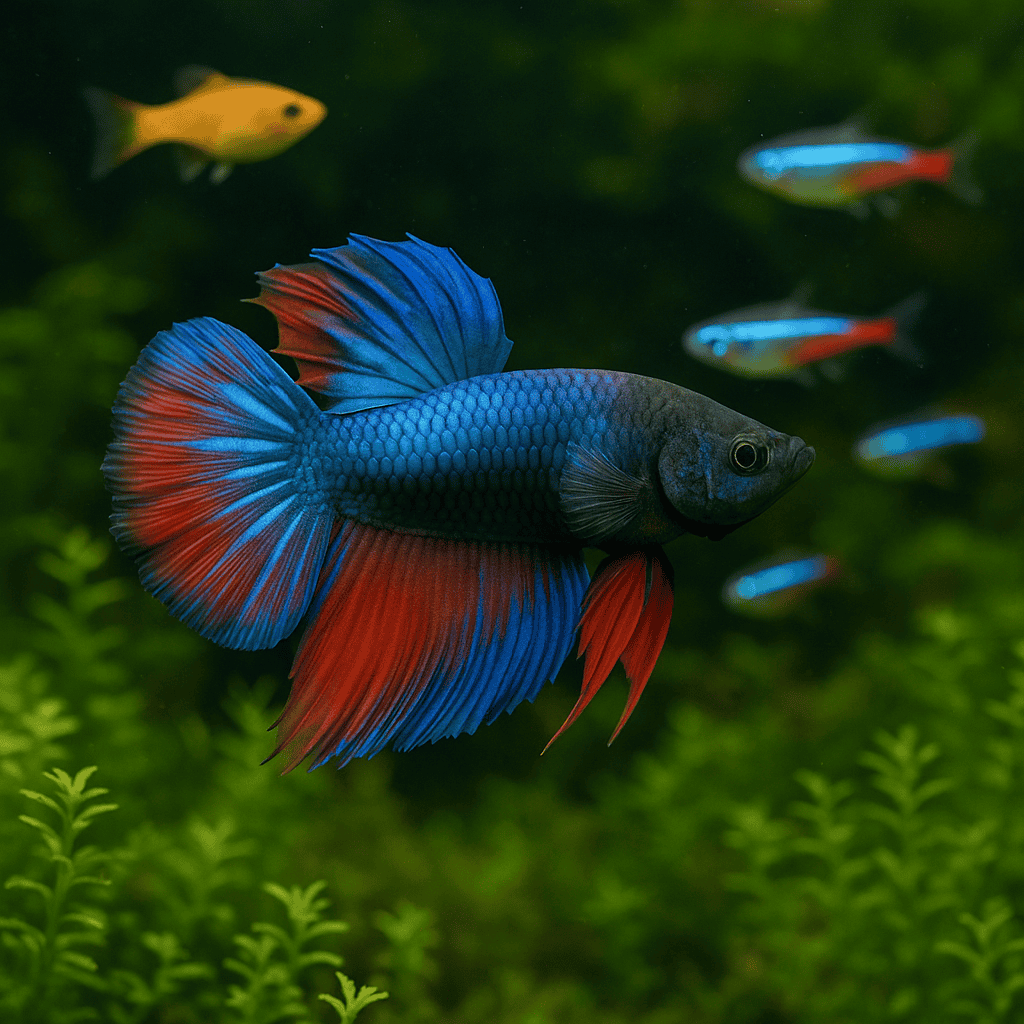
Creating an ideal aquarium setup for female bettas and neon tetras requires careful planning to guarantee a peaceful environment. I recommend a minimum of 20 gallons to minimize territorial disputes. Incorporating live plants like Java moss and Anubias provides both hiding spots and reduces stress, which is essential for lowering aggression.
It’s important to maintain stable water parameters, with temperatures between 76-82°F and a pH of 6.0-7.5. Regular water changes and an effective filtration system are crucial for a thriving aquarium ecosystem. Finally, introduce the female betta last to enhance the chances of harmonious coexistence with neon tetras as suitable tank mates.
Conclusion
In summary, while female bettas can coexist with neon tetras under the right conditions, it’s essential to monitor their interactions closely. I’ve observed that providing a spacious, well-planted aquarium can help minimize aggression and stress.
Keep an eye on your fish’s behavior, and be prepared to separate them if needed. Ultimately, success in this pairing hinges on individual temperaments and careful management of their environment, ensuring both species can thrive harmoniously together as schooling fish.