Understanding Betta Behavior
When you’re considering adding new tank mates for your male Betta, it’s important to understand their unique behavior. Bettas aren’t just fish; they have distinct personalities that can influence how they react to newcomers.
Initially, I’ve noticed my Betta often investigates new fish, sizing them up as potential rivals or companions. To minimize territorial aggression, rearranging tank decor before introduction can be beneficial. However, I learned the hard way that changing their favorite hiding spots can lead to stress and confusion, impacting their behavior negatively. Close monitoring after introducing new fish is essential, as aggression can surface immediately or develop gradually.
Understanding Betta’s behavior is significant for maintaining harmony in a community tank.
Choosing Compatible Tank Mates
After gaining insight into Betta’s behavior, it’s time to focus on selecting compatible tank mates that can coexist peacefully in planted aquariums. When choosing compatible tank mates, I recommend considering the following:
- Small, non-aggressive fish like emerald corys or black mollies
- Fish with minimal fin extensions to reduce aggression risks
- Avoiding species that resemble Bettas in color or fin structure
Introducing new fish to a well-established community tank guarantees stability and less stress for everyone involved. It’s essential to monitor interactions closely during the introduction phase, as even compatible fish can spark territorial behavior. Gradually acclimating new mates by floating them in the tank for a few hours can help ease anxiety and aggression. By following these guidelines, you’ll create a harmonious environment for all your aquatic friends.
Preparing the Tank Environment
Tank Size Considerations
A minimum tank size of 5 gallons is vital for keeping a single Betta healthy and happy. When considering tank size, I’ve found that larger environments greatly reduce stress for Bettas and their potential tank mates by providing more stable tank water conditions. Here are a few key tank size considerations:
- A larger tank allows for more swimming space and reduces territorial disputes.
- Cycling the tank is essential; it establishes beneficial bacteria that support stable water conditions.
- Regular water changes become easier in a larger tank, promoting a healthier habitat.
Hiding Spots Importance
Creating a comfortable environment for your Betta involves more than just water parameters and tank size; I always include ample hiding spots to reduce stress during the introduction of new fish. By incorporating decorations, plants, and caves, you offer refuge from potential aggression and help establish territorial boundaries.
This security allows your Betta to feel at ease while giving new fish safe spaces to acclimate. Plants like Anubis and java ferns improve water quality and create natural barriers, facilitating smoother introductions. Additionally, rearranging existing decor before adding new fish disrupts established territories, minimizing aggression.
Ensuring sufficient hiding spots for all species fosters a harmonious community, preventing overcrowding in certain areas and encouraging peaceful coexistence.
Quarantine Procedures for New Fish
When I bring new fish home, I always prioritize a quarantine period of at least two weeks to safeguard my Betta and its tank mates from potential diseases.
During this time, I closely monitor the newcomers for any signs of illness, like lethargy or discoloration, which could indicate underlying health issues.
Setting up a separate quarantine tank that mirrors the Betta’s environment and uses the same water conditioner is essential for their well-being as I prepare for a safe introduction.
Importance of Quarantine
Quarantining new fish is essential for maintaining a healthy Betta tank, as it greatly reduces the risk of introducing diseases that could harm your established fish. As a Betta Splendens enthusiast, I also appreciate that this process not only safeguards your Betta but allows you to observe the new fish closely. Here are a few key points to take into account:
- A quarantine period of at least two weeks is vital.
- Monitor for signs of illness like lethargy or visible lesions.
- Maintain separate water conditions to protect both the new fish and the Betta.
Quarantine Duration Recommendations
After confirming that new fish are safely quarantined, understanding the recommended duration for this process is essential to maintaining a healthy Betta tank. I always recommend a minimum quarantine duration of two weeks. This time allows you to monitor for signs of illness or disease before introducing new fish to your established Betta environment.
During this period, it’s vital to keep the new fish in a separate tank with stable water conditions and a reliable filter system. Regularly observe them for symptoms like lethargy or unusual swimming patterns. Additionally, always use a separate net when handling quarantined fish to prevent cross-contamination.
Once the quarantine duration is complete, take the time to gradually acclimate the new fish to minimize stress and guarantee compatibility.
Monitoring Fish Health
Monitoring the health of new fish during their quarantine is essential, as any signs of distress can indicate underlying issues that need to be addressed. Keeping a close watch for symptoms guarantees the well-being of your aquatic community. Here are some key things I monitor:
- Observe for lethargy or unusual swimming behavior.
- Look for any visible lesions or abnormalities on the fish.
- Maintain ideal water conditions to reduce stress.
- During the minimum two-week quarantine, I make sure to provide a stable environment with appropriate water temperature and pH. After this period, I gradually acclimate the new fish to the established Betta tank. Post-introduction, I continue monitoring fish health closely to promptly address any signs of aggression or stress.
Gradual Introduction Techniques
When introducing new fish to an established Betta tank setup, it’s essential to approach the process gradually to minimize stress for everyone involved.
First, I make sure to quarantine the new fish for at least two weeks, ensuring they’re healthy and disease-free. Before their introduction, rearranging the tank decor can disrupt established territories and help reduce aggressive behavior from my Betta. Turning off the LED light for a few hours also creates a calmer environment. I then observe the new fish closely, keeping an eye on my Betta’s behavior.
If I notice any signs of aggression or stress, removing any problematic tank mates immediately is advised. This careful approach can lead to a more harmonious community.
Monitoring Betta Aggression
How can you guarantee peaceful coexistence in your Betta tank after introducing new fish? In my experience, one of the most important steps is monitoring betta aggression closely and installing a sponge filter can reduce strong currents that aggravate stress. Be aware that some bettas may show immediate hostility while others take time to reveal their true colors.
- Look for signs of aggression like flaring fins or chasing.
- Be attentive to nipping behavior that could lead to injuries.
- Keep a log of interactions to track patterns over time.
- If you notice any signs of aggression, it might be necessary to remove either the Betta or the new fish to maintain harmony. Continuous observation for several days post-introduction is essential, as dynamics can shift quickly in an aquarium.
Adjusting Feeding Routines
Adjusting your Betta’s feeding routine can greatly impact its health and overall well-being, especially in a tank with more active or aggressive tank mates and a gentle Filtration system. I’ve found that feeding smaller portions multiple times a day helps guarantee my Betta fish gets enough food without competing too fiercely.
Observing when my Betta is most active allows me to align feeding times for better access.
Here’s a quick reference table for your feeding strategies:
| Strategy | Description |
|---|---|
| Multiple Smaller Feedings | Feed small amounts throughout the day |
| Timing | Feed during peak activity times |
| Feeding Distractions | Offer food to other fish first |
| Sinking Food Options | Use food designed for slower eaters |
Creating Hiding Spots and Decor
When I set up my Betta tank, I always prioritize creating ample hiding spots with decorations like caves and plants. These elements not only reduce stress for both the Betta and any newcomers but also help establish personal territories, minimizing confrontations. Regularly rearranging these decorations can disrupt the Betta’s existing territory, making it easier for new fish to acclimate comfortably.
Importance of Hiding Spots
Creating a comfortable environment for your Betta involves more than just water parameters and tank size; I always include ample hiding spots to reduce stress during the introduction of new fish. By incorporating decorations, plants, and caves, you offer refuge from potential aggression and help establish territorial boundaries.
This security allows your Betta to feel at ease while giving new fish safe spaces to acclimate. Plants like Anubis and java ferns improve water quality and create natural barriers, facilitating smoother introductions. Additionally, rearranging existing decor before adding new fish disrupts established territories, minimizing aggression.
Ensuring sufficient hiding spots for all species fosters a harmonious community, preventing overcrowding in certain areas and encouraging peaceful coexistence.
Choosing Appropriate Decorations
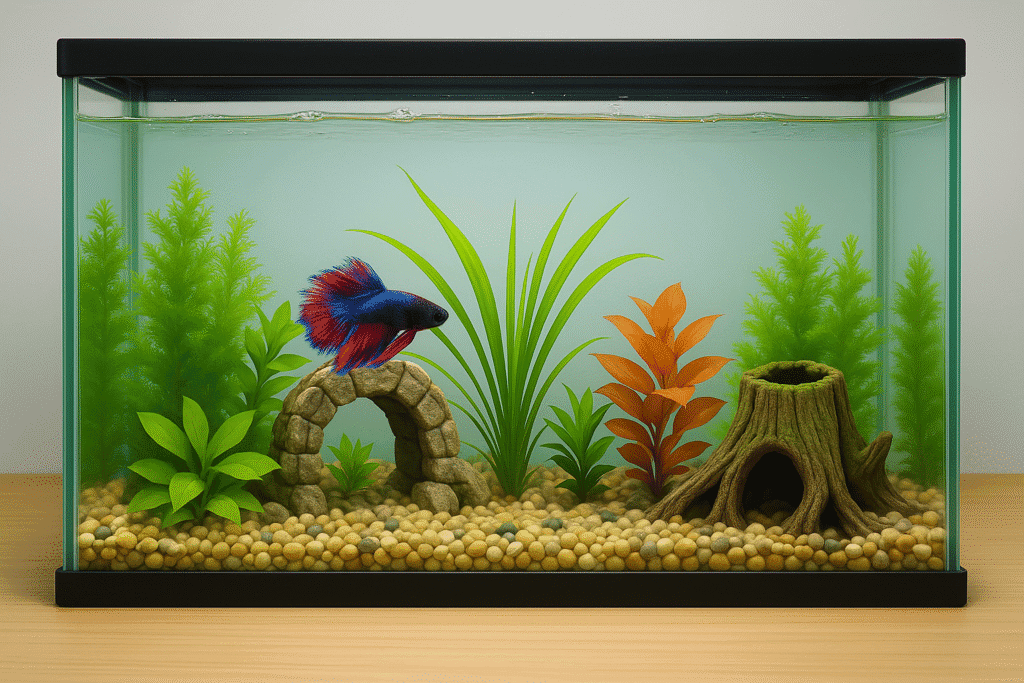
Creating a visually appealing and functional aquarium involves selecting the right decorations that serve both aesthetic and practical purposes. I recommend incorporating a variety of decorations, such as caves, silk or plastic plants, and driftwood.
These not only provide hiding spots for your Betta and new fish but also help reduce territorial disputes. It’s essential to choose plants with no sharp edges to prevent injuries. Arranging decorations to create multiple levels allows for exploration and minimizes stress during interactions. Live plants like anubias and java ferns can enhance your tank’s beauty while improving water quality.
Regularly rearranging decor before introducing new fish can disrupt the Betta’s established territory, creating a smoother, less stressful adjustment for all involved.
Rearranging Decor for Comfort
I find rearranging the decor in your Betta tank can greatly enhance the comfort and security of both your Betta and any new fish you plan to introduce. By disrupting established territories, you can help reduce aggression during the introduction process. Here are a few strategies I recommend:
- Incorporate plenty of hiding spots using tall plants and caves.
- Use decorations without sharp edges to prevent injuries.
- Regularly change the layout to stimulate curiosity and minimize territorial behavior.
- Strategically placing these hiding spots can provide cover and visual barriers, allowing both your Betta and new fish to seek refuge. This not only reduces stress but promotes a sense of security in their shared environment, making their introduction smoother and more successful.
Responding to Stress and Conflicts
When introducing new fish to your Betta’s environment, it’s vital to monitor their behavior closely for any signs of stress or aggression. Look for indicators like flaring or chasing, as these behaviors can signal discomfort.
If I notice increased stress levels in my Betta, rearranging the tank decor can disrupt established territories, helping to reduce aggression during the adjustment period. Additionally, using a quarantine tank for new fish minimizes the risk of introducing disease, which can worsen stress. I also implement feeding strategies that guarantee my Betta receives adequate nutrition amidst the chaos.
Finally, removing either the Betta or the new fish may be necessary if aggression escalates to prevent injury or stress-related health issues.
Long-term Care and Maintenance
Maintaining a harmonious environment for your Betta goes beyond just managing initial introductions and conflicts. Long-term care is essential. Here are a few key practices I follow:
- Regular water changes should be performed every 1-2 weeks to keep water quality ideal.
- Monitor ammonia, nitrite, and nitrate levels with test strips for a healthy tank.
- Provide a varied diet, including high-quality pellets and occasional freeze-dried bloodworms.
- A gentle filter helps avoid strong currents, as Bettas prefer calm waters. Additionally, I maintain a stable temperature between 78 to 82°F with a reliable heater. It’s also wise to add compatible bottom dwellers to the tank for a balanced ecosystem. These steps help create a long, flowy environment where your Betta can thrive.
Conclusion
In my experience, successfully adding fish to your established betta tank requires careful planning and attention to detail. By understanding betta behavior and choosing compatible tank mates, you can create a harmonious environment.
Remember to prepare the tank, implement quarantine procedures, and introduce new fish gradually. Adjusting feeding routines and providing hiding spots can greatly reduce stress. Keeping an eye on interactions will help you address conflicts early on, ensuring a thriving community for your Betta and its companions.